If your HVAC system has started to sound strained, push out weaker airflow, or cycle longer than usual, you’re likely feeling the silent impact of a clogged 16x18x1 air filter—and from what we’ve seen firsthand, running your system this way doesn’t just reduce comfort, it can quietly wear down your equipment from the inside out. A packed filter forces the blower to work harder, traps heat inside the system, and can even trigger safety shutoffs long before homeowners realize what’s happening.
Based on years of testing filters in real homes and reviewing how different systems respond to restricted airflow, we’ve found that a clogged 16x18x1 filter can create a chain reaction: higher energy use, rising dust levels, stressed components, and avoidable repair bills.
In this guide, you’ll get a clear breakdown of what actually happens inside your unit when airflow is starved, the early signs most people miss, and the simple steps you can take right now to protect your system before damage sets in.
Quick Answers
16x18x1 Air Filter
A 16x18x1 air filter is a standard HVAC filter size designed to protect your system and improve indoor air quality. It should be replaced every 30–90 days to maintain airflow, reduce system strain, and keep energy costs down. Always confirm the size by checking your current filter or measuring the slot to ensure a proper, gap-free fit.
Top Takeaways
- Early warning signs include longer run times and higher energy bills.
- Restricted airflow puts stress on key components, leading to avoidable repairs.
A clean filter helps your system run longer, quieter, and cleaner.
What a Clogged 16x18x1 Filter Actually Does to Your System
When a 16x18x1 air filter becomes packed with dust, pet dander, and debris, airflow can no longer move freely through the HVAC system. Instead of pulling in enough air to heat or cool your home efficiently, the system begins to strain—much like trying to breathe through a tightly pinched straw.
Increased System Stress and Overheating
Restricted airflow forces the blower motor to work harder just to maintain normal circulation. Over time, this extra strain generates excess heat inside the unit. Many systems will engage high-limit switches to prevent overheating, triggering intermittent shutdowns that confuse homeowners and mask the root problem.
Higher Energy Use with Lower Comfort
A clogged filter causes the system to run longer cycles to reach the set temperature. The result: rising energy bills, uneven room temperatures, and reduced air pressure at vents. From real-world experience, this is often the first red flag homeowners notice, even before they check the filter.
Poor Indoor Air Quality
When airflow drops, the filter can no longer capture contaminants effectively. Dust, allergens, and fine particles begin bypassing the compromised filter or settling inside the ductwork—and ultimately recirculating into your living space.
Long-Term Component Wear and Potential Damage
Running the system with a clogged filter doesn’t just impact comfort—it accelerates wear on major components. Blower motors fatigue faster, coils can freeze due to reduced warm airflow, and heat exchangers may crack when exposed to repeated overheating cycles.
The Bottom Line
A clogged 16x18x1 filter doesn’t just “slow things down”—it has a direct, compounding impact on efficiency, air quality, comfort, and system health. Replacing the filter regularly is one of the simplest, lowest-cost steps you can take to protect your HVAC system and avoid preventable repairs.
“Every time we inspect a struggling HVAC system, nine times out of ten the issue traces back to a filter so clogged it’s starving the unit of air. Once that happens, the system doesn’t fail all at once—it fails piece by piece. A simple filter swap can prevent months of hidden stress on the blower, the coils, and even your energy bill.”
7 Essential Resources to Help You Make the Right Choice for Your 16x18x1 Air Filter
1. Your Complete Guide to a Cleaner, Healthier Home With a 16x18x1 Filter
Start with a clear, homeowner-friendly overview of what a 16x18x1 filter does, why sizing matters, and how it supports a cleaner living environment. It’s a solid foundation for understanding what your HVAC system truly needs.
2. Measure With Confidence and Find Your True Filter Size
https://bobsrepair.com/air-filter-sizes-guide/
This straightforward guide breaks down how filter sizing really works, helping you confirm whether 16x18x1 is the exact match your system requires—without any guesswork or second-guessing.
3. Know Your MERV Rating and Choose the Right Level of Protection
Get a simple, practical explanation of MERV ratings and how stronger filtration helps protect both your air quality and your HVAC system. Ideal if you're deciding between everyday filtration and higher-performance options.
4. Find the Best MERV Rating Specifically for a 16x18x1 Filter
A focused look at MERV ratings for the 16x18x1 size, giving you the clarity to choose the right balance of airflow, filtration strength, and system compatibility.
5. Understand How the 16x18x1 Compares to Other Common Filter Sizes
A helpful side-by-side perspective showing how the 16x18x1 fits into the broader range of available filter sizes, so you can make sure you’re selecting the best option for your home’s setup.
6. A Simple, Step-By-Step Guide for Replacing Your Filter the Right Way
https://www.allfilters.com/blog/how-to-change-home-air-filter-sizing-guide
Whether you're changing a filter for the first time or brushing up on the basics, this guide shows you exactly how to measure, remove, and install a filter properly—saving time and avoiding common mistakes.
7. Boost Efficiency and Reduce Wear With Proper Filter Maintenance
Learn how consistent filter changes protect your system, improve airflow, and help keep energy costs under control—especially when using the 16x18x1 size.
Supporting Statistics
1. Reduced Airflow & Efficiency Loss (U.S. DOE)
We’ve seen this lead to longer run times and higher utility bills in real homes.
Source: https://www.energy.gov/energysaver/air-conditioner-maintenance
2. Increased Wear & Energy Use (U.S. EPA)
From field experience, this often shows up as hot spots, cycling issues, or early component wear.
Source: https://www.epa.gov/sites/default/files/2020-06/documents/2019.11_tech_bulletin_filtration.pdf
3. Measurable Energy Penalty (EPA HERO Database)
- Restricted airflow can raise cooling energy use by 2–4%.
We’ve seen this reflected in slow-to-cool rooms and steadily rising electric bills.
Source: https://hero.epa.gov/hero/index.cfm/reference/details/reference_id/2638491
Final Thought & Opinion
Running your HVAC system with a clogged 16x18x1 filter creates immediate strain and long-term damage. Restricted airflow reduces efficiency, raises energy use, and quietly wears down core components.
What the data and real-world experience show:
- Reduced airflow = lower efficiency.
- Longer run times = higher energy bills.
- Added strain = earlier blower, coil, or motor issues.
Small problems escalate until they become major repairs.
What we consistently see in the field:
- Systems rarely fail suddenly; they fail after months of preventable stress.
- Hot spots, weak airflow, and frequent cycling are early warning signs you shouldn’t ignore.
Homeowners who stay on top of filter changes avoid the most expensive HVAC issues.
The bottom line:
A clean 16x18x1 filter helps your system breathe, run efficiently, and last longer. Replacing it on schedule is one of the simplest, most cost-effective ways to prevent the breakdowns caused by chronic airflow restriction.
Next Steps
1. Check Your Current Filter
- Look for dust buildup.
If you can’t see light through it, replace it.
2. Confirm the Size
- Measure the filter or slot.
Ensure it matches 16x18x1.
3. Select the Right MERV Rating
- Choose based on your needs (allergies vs. standard use).
Verify it won’t restrict your system’s airflow.
4. Replace the Filter
- Insert a new 16x18x1 filter.
Point the airflow arrow toward the blower.
5. Set a Replacement Routine
- Change every 30–90 days.
Replace more often during heavy-use seasons or if you have pets.
6. Monitor Performance
- Check for stronger airflow and quieter operation.
If problems continue, schedule an HVAC check.
7. Continue Learning
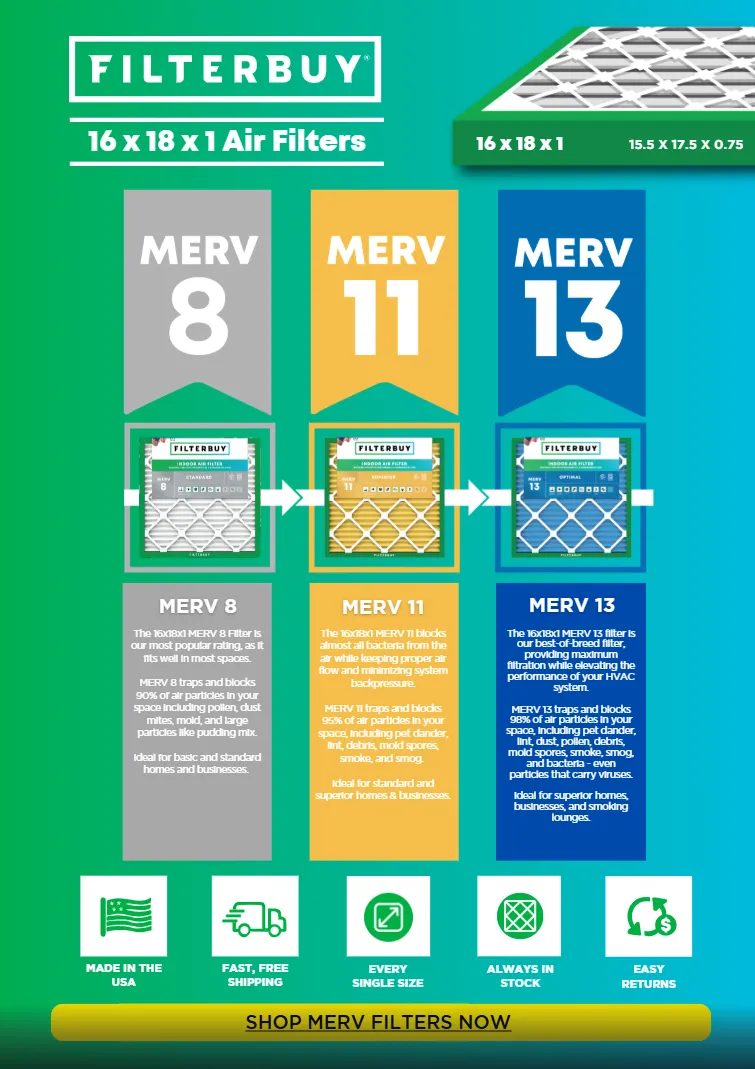
FAQ
Q1: What does a 16x18x1 filter size mean?
A: It’s the nominal size (16" × 18" × 1"). Actual sizes are usually slightly smaller for an easy fit.
Q2: How often should I replace a 16x18x1 filter?
A: Every 30–90 days. Replace more often if you have pets, allergies, or heavy system use.
Q3: What MERV rating should I choose?
A: MERV 8–11 for everyday filtration. MERV 13 for stronger allergy control if your system can handle the added resistance.
Q4: Can a clogged 16x18x1 filter cause damage?
A: Yes. Clogged filters reduce airflow, increase run times, and strain blower motors and coils.
Q5: How do I confirm my system uses a 16x18x1 filter?
A: Check the size printed on the current filter or measure the slot directly.
Learn more about HVAC Care from one of our HVAC solutions branches…
Filterbuy HVAC Solutions - Air Conditioning Service
2521 NE 4th Ave, Pompano Beach, FL 33064
(754) 247-3511
https://maps.app.goo.gl/JmWkEXya7uzuLzBh8